
World
AI Challenge: Why Music Must Be Protected Like Physical Craft
In every corner of the global economy, handmade craft carries a premium. A hand-carved instrument, an original painting, or a bespoke piece of furniture commands value precisely because a human spent time, intention, and labor mastering a skill to bring it into existence. Mass-produced plastic imitations are cheap due to non-uniqueness. Everywhere, that is, except on digital streaming platforms. On Spotify, Apple Music, and Deezer, a song crafted over 200 hours in a studio by an artist who engineered every synth patch, sculpted every frequency, and arranged every transition yields the exact same fraction-of-a-cent payout per stream as a zero-effort, 100% AI-generated track rendered in three seconds by typing a text prompt. The modern streaming business model has created a bizarre paradox: it actively penalizes human craft while rewarding automated factory output.
The Illusion of Production vs. The Reality of Craft
The issue isn't technology - electronic music has always embraced technological evolution. Synthesizers, samplers, drum machines, and digital audio workstations (DAWs) all gave creators powerful new ways to express intent. The line is crossed when technology replaces human intent entirely. Prompting an AI model to generate a complete track or output raw audio stems - and then slapping a basic equaliser or dynamic limiter on top - is not "music production." TRADITIONAL / HANDMADE CRAFT: [ Human Intent ] ➔ [ Synthesis & Sound Design ] ➔ [ Composition & Arrangement ] ➔ [ Final Mixing & Mastering ] Result: Active Creative Authorship END-TO-END GENERATIVE RELIANCE: [ Text Prompt / mood ] ➔ [ AI Engine ] ➔ [ Post-Processing / Mastering (opt) ] Result: Output Curation Sampling is taking an existing audio fragment and actively slicing, warping, re-pitching, and recontextualizing it into something original. Generative stem creation asks a machine to do the structural, harmonic, and sonic heavy lifting instead of you - it's not creation process. Mixing an audio file you didn't compose or arrange is simply finishing someone else's work. It turns the "producer" into an assembly line worker polishing a pre-fabricated product.
How "Content Farms" Siphon Real Income
Because streaming platforms run on a pro-rata royalty model, all subscription revenue goes into one massive pool per region and is distributed purely based on share of total plays. This model creates a massive loophole for automated content farms - bot operations upload tens of thousands of fully generated ambient, lo-fi, or background tracks daily, the passive background playlists (sleep, focus, study) play these tracks continuously to unwary listeners, an finally we get: * Royalty Stealing: Every play generated by an automated track steals a micro-fraction of a cent directly out of the pool meant for human artists who spend their lives honing their art. While a physical artisan can charge more for their labor, a human musician streaming next to an AI bot sees their work commoditized down to zero.
The Solution: Treat Music Like Physical Craft
If we want to protect human culture, streaming platforms and global distributors must adopt unified regulations that mirror how physical markets handle handmade goods versus mass-produced items. 1. Mandatory Provenance Metadata & Clear Badging Distributors and platforms must require verified "digital nutrition labels" (using open standards like C2PA or DDEX) upon upload. Listeners deserve absolute transparency, and tracks should be audited into clear categories: * Human-Crafted: Full human authorship and composition (DAW, live recordings, improvisation, using other "human-crafted" samples). * AI-Assisted: Human-led compositions using AI utility tools like a stem isolation, vocal processing or sound creation. * Fully Generated: Audio where the primary music, arrangement, and sound design were generated by a machine. 2. Separate Rate Pools AI-generated track should never compete in the same financial bucket as a human composer's work. Platforms must introduce a two-tier system: a protected Human Arts Royalty Pool and a separate, lower-tier AI Background & Utility Audio Pool. 3. Exclude Synthetic Audio from Recommendation Engines Fully generated tracks should be excluded from default editorial and algorithmic recommendation engines unless a user explicitly opts into an "AI Background Mode."
The Resurgence of Real Presence
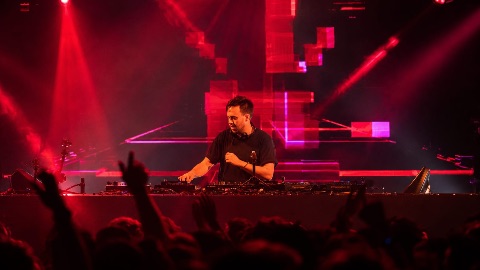
Until streaming platforms fix their broken economic incentives, the true value of music is returning to where machines cannot compete: live venues, direct-to-fan platforms, and physical formats. An algorithm can simulate the statistical probability of a synth drop, but it cannot understand the energy of a packed club at 3:00 AM. It cannot perform a live set, react to a crowd, or build a real community. Music isn't just "content" to fill an algorithm's queue - it is an emotional connection between human beings. It’s time the platforms paid for it accordingly.